


Klarna: Smarter everyday money
4.856.58K Reviews
App Specs
- Version
- 26.29.240
- Updated On
- License
- Free
- Downloads
- 50,000,000+
- Developer
- Klarna Bank AB (publ)
- Categories
- Shopping
- Platform
- Android, iOS
Screenshots

 Analysis by AppCompare
I’ve found that payment apps work best when everyone in a household understands whose account is being used and who is responsible for each purchase. That matters especially with Klarna: it can make shopping and payment tracking feel more organized, but it is still a personal financial service, not a shared family wallet. I’d treat it as one person’s account and use clear conversations—not a shared login—to coordinate household spending.
A household purchase without account confusion
Picture a familiar situation: the household needs a replacement kitchen appliance, one person finds a suitable option online, and another wants to check the total against the monthly budget before anyone commits. Klarna can be useful for the shopper who is ready to handle the checkout and keep the resulting payment details together. The other person can help compare products or discuss affordability, but the account holder should make the purchase and keep responsibility for any payment plan attached to it.
That distinction is more than a tidy habit. If several people use one person’s account or device without agreement, it can become difficult to remember who made a purchase, who expects to pay, and which reminders relate to which commitment. I’d decide on the item, maximum household spend, and person responsible before opening checkout. Klarna can help that person review their own purchases; it cannot replace a shared budget discussion.
Guides and Analysis on Klarna: Smarter everyday money
Keep the account personal, even on a shared device
A family tablet or a phone passed around the house can make shopping convenient, but convenience should not blur account boundaries. I would avoid leaving a financial account open for other household members to browse or use. Each person should know when they are looking at another person’s account, and the account holder should handle payment decisions and account changes themselves.
This is particularly useful when someone is comparing prices on a larger household purchase. You can research together, save the decision for a calm moment, and let the account holder complete the transaction after checking the amount and terms displayed at checkout. That small pause helps prevent an accidental order or an assumption that another person has agreed to take on a payment.
It also makes the app easier to interpret later. A purchase history is most useful when it reflects one person’s shopping rather than a mixture of everyone’s activity. If your household needs genuinely shared access to expenses, a joint budgeting method or a shared account designed for that purpose may be a better fit than passing around a personal shopping account.
Coordinate payments before checkout
Payment flexibility can make a purchase feel more manageable, but splitting a total does not make the item cheaper. I’d compare the full amount with the household budget first, then decide whether the timing of payments fits upcoming bills. A practical routine is to agree who is paying, write down the expected contribution if costs are being shared, and check the payment schedule in the account holder’s app after the purchase.
Worth Reading Before You Choose

Google Calendar Makes a Crowded Week Easier to Manage

Ludo King Makes the Most of the Minutes Between Plans

Baby Panda World Brings Quick Play to Modern Phones, but Its Game Library Feels Busy

ESPN’s Live Game View Makes Following Close Games Easier

QuizzLand Review: A Good Fit for Short Trivia Breaks, Not Every Player

Basketball Stars: Multiplayer Is Fast, but Can It Recover When Matches Go Wrong?
That routine is valuable for ordinary expenses too. If one person orders household supplies while another handles groceries, a brief weekly check-in can help both people understand what has already been committed. Klarna’s payment overview can inform that conversation for the account holder, but it should not be treated as a complete view of a household’s finances or as a substitute for tracking payments made elsewhere.
Age, trust, and the right person to use it
The app’s content rating is Everyone, but that describes the rating shown for the app; it does not mean every payment option is suitable for every person. Anyone considering a purchase should read the terms presented for that transaction and understand who is legally and financially responsible. I would keep an adult account holder in charge of payment decisions rather than letting a child or another household member place orders through their account.
Klarna is a stronger fit for adults who shop online or in stores, want purchase and payment details in one place, and are comfortable keeping close track of what they owe. It is less appealing if you prefer to pay the entire balance immediately, do not want another account to monitor, or find delayed payment encourages you to buy things you would otherwise skip. In those cases, a debit card, credit card, or direct payment may be simpler and easier to reconcile.
What is Klarna?
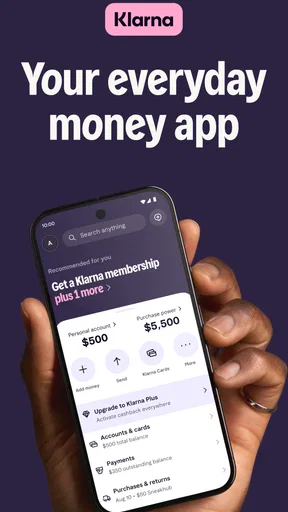
In simple terms, Klarna is a payment service that allows you to buy now and pay later. Sounds pretty nifty, right? It’s like having a friendly financial assistant that lets you split your purchases into manageable chunks. Whether you’re shopping online or in-store, Klarna has got your back.
Getting Started
Setting up Klarna is as easy as pie. Just download the app from the App Store or Google Play, and you’re good to go. The interface is straightforward, and even if technology isn’t your forte, you’ll find it a breeze to navigate. Once you’re in, you can start exploring all the features it offers.
Klarna is a free shopping app from Klarna Bank AB (publ), and its audience is broad: it has an Everyone content rating. It arrived in 2018 and has since become a widely used option, with more than 50 million installs. Its average rating is 4.8 from around 1.5 million ratings, which suggests many shoppers find it useful, though popularity alone cannot tell you whether its payment approach suits your habits. The current version is 25.50.419, and it requires Android 9 or later.
Features That Stand Out
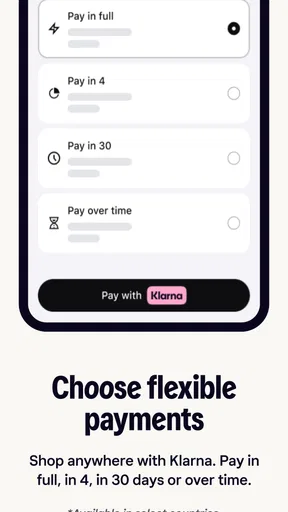
One of the coolest features is the ability to split payments. You can divide your total into four interest-free payments, which is perfect for those big-ticket items you've had your eye on. Plus, Klarna sends reminders, so you’re always on top of your payment schedule.
Another great feature is the Pay Later option. You can shop now and pay within 30 days; it’s like a short-term loan without the hassle of paperwork. And if you’re shopping online, Klarna’s browser extension is a lifesaver, allowing you to use its services on almost any website.
These options are most useful when they solve a timing problem, not when they make an unaffordable purchase look harmless. Before choosing one, I’d read the exact terms shown for the order, check the payment dates, and decide whether I could cover them even if my plans change. Options and availability can depend on the purchase and checkout, so I wouldn’t assume the same plan will appear every time.
Shopping Experience
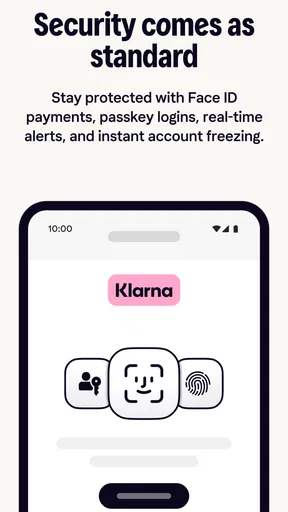
Using Klarna feels like having an extra layer of financial freedom. The app keeps track of all your purchases, and you can view your history at any time. It’s also incredibly secure, using high-level encryption to protect your data. So, you can shop with peace of mind.
One practical habit is to check the app after placing an order rather than relying on memory or an email buried in your inbox. Confirm that the purchase appears as expected, then note the payment dates somewhere you already use to manage bills. Reminders are helpful prompts, but I still prefer to treat them as a backup: a notification can be missed, while a quick scheduled review gives you a chance to spot a mismatch early.
For online shopping, Klarna’s appeal is that it brings payment management into the buying flow. That differs from using a store’s own financing option, which may only be available with that retailer, and from a conventional card, where purchases are usually handled through the card provider’s account. The trade-off is that a separate payment app creates another place to check. If you already have a reliable card and budgeting routine, Klarna may add little; if you want purchase-specific tracking, it can be a useful extra view.
It also helps to separate shopping discovery from payment choice. Browsing deals can make an item feel urgent, especially when a discount is involved. I’d decide whether I actually need the product before considering a payment plan, then compare the final checkout total and delivery details across retailers. A tempting offer is only a bargain if the item and full cost make sense for you.
What about returns or a changed order? I’d start with the retailer’s return process and keep the order confirmation until the purchase is settled. Then check the payment status in Klarna and follow any instructions shown there. A return and a payment schedule are related, but they are not the same task; assuming a returned item automatically resolves every payment detail can leave you uncertain about what remains due.
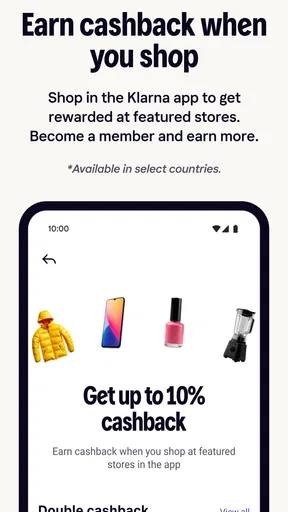
What’s more, Klarna often offers exclusive deals and discounts from partner stores. So not only are you spreading out your payments, but you might also snag a bargain or two along the way.
I’d treat those offers as a convenience rather than a reason to shop. If I’m already planning to buy something, checking whether a relevant deal is available can be worthwhile. If I’m browsing without a specific need, discounts can encourage extra spending and undermine the budgeting benefit of keeping track of purchases. My rule would be to compare the final price with other sellers and only let the deal influence where I buy, not whether I buy.
Final Thoughts
In a world where financial flexibility is becoming more important, Klarna offers a fresh way to manage spending. It’s particularly great for those impulse buys or when you need a bit of breathing room with your budget.
I’d be more cautious about using it for impulse purchases than that description suggests. Splitting a payment can ease the timing of a planned expense, but it can also make several separate purchases harder to see as one growing commitment. Before checking out, I’d review existing payment obligations and ask whether I’d still want the item if I had to pay its full price today. If the answer is no because the total is genuinely outside my budget, postponing the purchase is likely the safer choice.
For a household, my best use case is one accountable adult using the app for their own purchases, then sharing the relevant costs and dates through the household’s usual budgeting routine. I would skip it as a shared login or as a way to give younger family members independent access to deferred payments. A separate shared spending tool is better when several people need to enter expenses directly, while a straightforward card payment is often better for anyone who wants fewer accounts and no payment schedule to monitor.
If you’re someone who loves to shop but wants to keep an eye on your finances, Klarna is definitely worth checking out. It’s like having a savvy shopping companion right in your pocket, ready to help you make the most of your money. So, next time you’re eyeing that must-have item, remember Klarna’s got your back.
Pros
- User-friendly interface for easy navigation.
- Flexible payment options for budgeting.
- Secure transactions with encryption.
- Integration with numerous online stores.
- Offers and deals for cost savings.
Cons
- Limited support for certain retailers.
- Occasional app glitches reported.
- Delayed notifications for transactions.
- Requires a strong internet connection.
- Some features restricted to certain regions.
FAQs for Klarna: Smarter everyday money
What is Klarna and how does it work?
Klarna is a flexible payment service that allows users to shop online and split their payments over time. It offers options like "Pay Later," where you can defer payments, and "Pay in 4," which divides your purchase into four interest-free installments. Simply choose Klarna at checkout to use these features.
Is Klarna safe to use for online shopping?
Yes, Klarna is considered safe for online transactions. It employs high-level security measures, including data encryption, to protect your personal and financial information. Additionally, Klarna is regulated by financial authorities in various countries, ensuring compliance with strict security and privacy standards.
Does Klarna affect my credit score?
Using Klarna might impact your credit score, depending on the type of service you use. For "Pay Later" options, a soft credit check is performed, which doesn’t affect your score. However, if you opt for financing plans, a hard credit check may be conducted, potentially impacting your credit score.
What are the eligibility requirements for using Klarna?
To use Klarna, you must be at least 18 years old, have a valid bank account, and a good credit history. Klarna also requires users to have a positive payment history with the service. Eligibility may vary based on the specific payment option you choose and your location.
What should I do if I encounter issues with a Klarna payment?
If you experience problems with a Klarna payment, first check your app for any notifications or alerts. You can also contact Klarna’s customer service via the app or website. They offer support through chat, phone, and email to help resolve any payment issues quickly.


